
In the world of branding, marketing, and interior design, signage plays a pivotal role in capturing attention and conveying messages. Businesses and designers today face a critical choice: should they opt for traditional signage or embrace the modern appeal of custom neon lights? While both options have their merits, understanding their differences can help brands make an informed decision that aligns with their goals, budget, and desired impact.
This guide explores the advantages, drawbacks, and applications of custom neon lights versus traditional signage, helping businesses and individuals choose what works best for them.
Understanding Traditional Signage
Traditional signage has been used for decades to promote businesses, products, and services. These signs can include:
- Printed banners
- Metal or acrylic signs
- Wooden boards
- Illuminated box signs with fluorescent or incandescent lights
Traditional signage is effective for delivering clear messages and providing functional visibility, but it often lacks the modern aesthetics and customization that today’s audiences expect.
The Rise of Custom Neon Lights
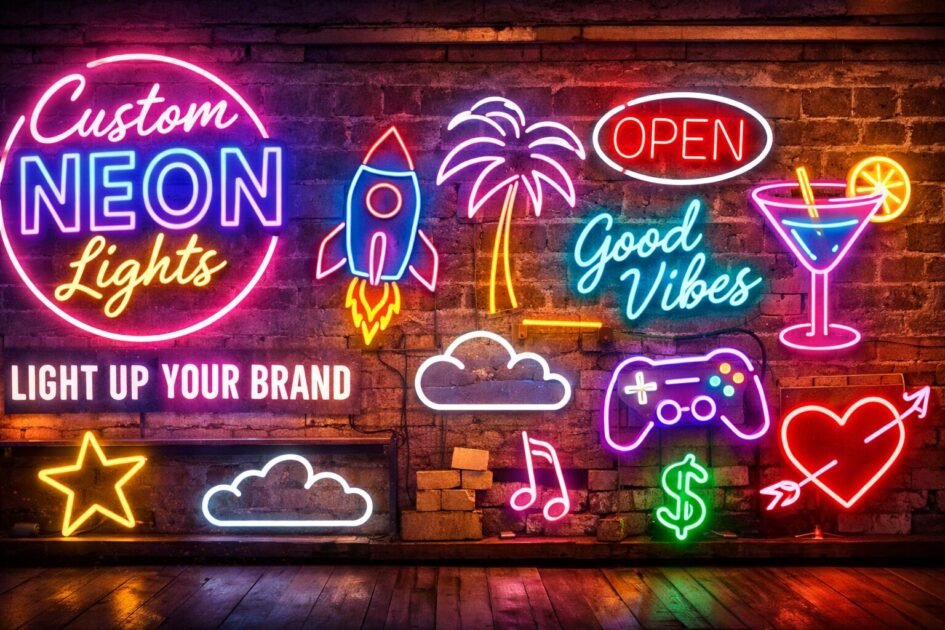
Custom neon lights are LED-based lighting solutions that replicate the classic neon glow while offering enhanced flexibility, safety, and energy efficiency.
Modern neon lights are used for:
- Branding in retail and hospitality
- Interior décor and ambient lighting
- Events, exhibitions, and experiential marketing
- Social media-friendly installations
Their popularity has surged because they combine visual appeal, personalization, and technology, offering a contemporary alternative to conventional signage.
Visual Impact and Attention-Grabbing Ability
One of the main differences between traditional signage and custom neon lights is visual impact.
- Traditional signage: Effective for straightforward communication, especially in daytime. Its impact depends on size, placement, and design quality.
- Custom neon lights: Stand out both day and night with vibrant glow, color variety, and artistic design. Neon lights naturally draw the eye, making them ideal for businesses seeking to create memorable impressions.
For brands and creative spaces, neon lights often outperform traditional signage in terms of attention-grabbing power and visual appeal.
Customization and Branding Potential
- Traditional signage: Offers limited customization. Businesses can choose materials, fonts, and colors, but intricate designs, animations, or creative lighting effects are difficult to achieve.
- Custom neon lights: Highly customizable in size, shape, color, typography, and even motion effects. Brands can showcase logos, taglines, or artistic patterns with glowing illumination, reinforcing brand identity more effectively.
Neon lights provide greater flexibility to match brand personality and stand out in a crowded marketplace.
Durability and Longevity
Durability is an important consideration for any signage investment:
- Traditional signage: Depending on the material, traditional signs can last years but may fade, warp, or suffer wear and tear from weather conditions. Illuminated versions may require frequent maintenance.
- Custom neon lights: LED-based neon lights are designed to last for years with minimal maintenance. They are resistant to shattering, weather conditions, and color fading, making them a long-term solution for both indoor and outdoor use.
Neon lights often offer better longevity and consistent visual quality compared to many traditional options.
Energy Efficiency and Cost
Cost and energy usage vary between the two options:
- Traditional signage: Typically lower upfront cost for basic signs but may require frequent replacements or energy-intensive lighting for illuminated versions.
- Custom neon lights: Higher initial investment but low energy consumption due to LED technology and minimal maintenance needs. Over time, neon lights can provide better value for money, especially for businesses focused on premium branding and long-term visibility.
Neon lights are increasingly seen as affordable luxury solutions that balance quality and efficiency.
Safety and Installation
Safety and installation considerations also differ:
- Traditional signage: Heavier materials and electrical components can make installation more complex and potentially hazardous.
- Custom neon lights: Lightweight, low-voltage, and flexible materials make installation safer and easier. LED neon lights generate minimal heat, reducing fire hazards compared to traditional lighting.
For businesses or homeowners, neon lights provide a safer and more convenient solution.
Modern Aesthetic and Design Trends
- Traditional signage: Often perceived as functional but dated in terms of aesthetics. While effective, it may not appeal to younger, design-conscious audiences.
- Custom neon lights: Align perfectly with contemporary design trends, including minimalist décor, vibrant retail interiors, and Instagram-worthy setups. Neon lights are not just signs—they are design statements that enhance ambiance.
In 2025, neon lighting is trending in both branding and interior design, making it a choice that resonates with modern audiences.
Applications: When to Choose Neon Lights vs Traditional Signage
Custom Neon Lights Are Ideal For:
- Retail stores, cafés, bars, and restaurants seeking a modern brand identity
- Interior décor for homes, studios, or offices
- Events, exhibitions, and experiential marketing spaces
- Social media-friendly designs to enhance digital engagement
Traditional Signage Is Ideal For:
- Informational or regulatory signs (e.g., safety, directions)
- Budget-conscious, functional outdoor signs
- Static branding where illuminated aesthetics are not required
- Businesses needing compliance with signage regulations in certain areas
The choice depends on purpose, location, audience, and brand image.
Combining Both for Maximum Impact
Some businesses and designers combine custom neon lights with traditional signage for layered branding strategies. For example:
- Neon logos paired with directional signage
- Illuminated neon for brand highlights, traditional boards for detailed information
- Neon accents on exterior metal or acrylic signs
This hybrid approach leverages the strengths of both options—the clarity and functionality of traditional signage with the visual impact of neon lights.
Future Trends in Signage and Neon Lighting
Looking ahead, the future favors interactive, customizable, and sustainable solutions:
- Smart neon signs integrated with apps and IoT devices
- Eco-friendly materials and low-power LED options
- Motion-responsive or animated neon signage for dynamic branding
- Digital signage combined with neon highlights for immersive experiences
These trends highlight the evolving role of neon lights as a preferred modern solution for stylish branding and impactful interiors.
Conclusion: What’s Better?
Both custom neon lights and traditional signage have their place in modern design.
- Traditional signage works well for functional, budget-conscious, or compliance-driven purposes.
- Custom neon lights excel in brand visibility, visual impact, personalization, and modern aesthetics.
For businesses and designers seeking to create memorable, stylish, and engaging environments in 2025, custom neon lights often provide a superior option, especially when combined with technology, creativity, and strategic placement. Ultimately, the best choice depends on your goals, audience, space, and budget, but neon lights are increasingly becoming the go-to solution for brands and spaces that want to shine.